Yet, first let me explain the Law of Consecration. Consecration means to dedicate, make holy, or to become righteous. It is a "divine principle whereby men and women voluntarily dedicate time, talents and material wealth to the establishment and building up of Gods Kingdom (Bible Dictionary)." It is a recognition that all that we have, including our talents and success, ultimately belong to our Heavenly Father who gave them to us in the first place. Therefore, in accordance with the Law of Obedience and the Law of Sacrifice, we must be willing to give what we have back to God. This means giving of our time, talent and resources. Which includes taking care of the poor, church callings, etc. (Neal A Maxwell explains more of this.) As Christ taught and as was a number of times reemphasized in the writings of Paul, "Freely we have received so freely we give." (Matthew 10:8)
After the Resurrection of Christ, the Apostles lived according to the Law of Consecration. In Acts 2:44-45 it says, "And all that believed were together, and had all things common. And sold their possessions and goods, and parted them to all men, as every man had need." In the dispensation of the fullness of times, or when the Lord reorganized his church in the last days, he again implemented the Law of Consecration as outlined in Doctrine and Covenants 42:30-39.
"And behold, thou wilt remember the poor, and consecrate of thy properties for their support that which thou hast to impart unto them, with a covenant and a deed which cannot be broken. And inasmuch as ye impart of your substance unto the poor, ye will do it unto me; and they shall be laid before the Bishop of the Church and his counselors, two of the elders or high priests, such as he shall appoint or has appointed and set apart for that purpose. And it shall come to pass, that after they are laid before the bishop of my church and after that he has received their testimonies concerning the consecration of the properties of my church, that they cannot be taken from the church, agreeable to my commandments, every man shall be made accountable unto me, a steward over his own property, or that which he has received by consecration, as much as is sufficient for himself and family...therefore the residue shall be kept in my storehouse, to administer to the poor and needy, as shall be appointed by the high council of church...for I will consecrate of the riches of those who embrace my gospel among the Gentiles unto the poor of my people who are of the house of Israel." (I have shortened the passage because I will mention the other scriptures later on.)
Hugh Nibly said, "the main purpose of the Doctrine and Covenants is to implement the Law of Consecration... this law, the consummation of the laws of Obedience and Sacrifice, is the threshold of the Celestial Kingdom, the last and hardest requirement of men and women."
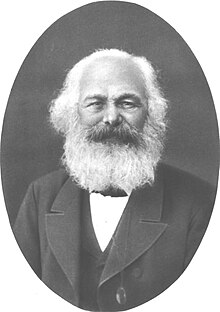 Communism or socialism is a theory given by philosopher Karl Marx. Basically he says, the world is unjust and capitalism cannot work because the Bourgeoisie, or the upper class control all of the resources and power. The working class, or the Proletariat, will at some point rise up in revolution and take control. Then everything and everyone will be equal. So now what we have are governments forcing their own control over large corporations to gain power, because they are "for the people." All the while, unqualified leaders take control and now there is a limit as to what accomplishments one can achieve in life, and how successful one can be. Because... how dare we work hard, and are more successful than somebody else.
Attitude of the Law of Consecration: I have been blessed, so how can I give back?
Attitude of Communism: Poor me, I deserve what you have even if I have not worked for it, so gimme gimme!! And therein lies the destruction of the American Dream.
Now let me address the bid differences between the two.
NUMBER ONE: Free will
President Marion G. Romney said in 1979, at the height of the cold war, "Communism is Satan's counterfeit for the Gospel plan (being the Law of Consecration), and...it is an avowed enemy of the God of the Land. Communism is the greatest anti-Christ power in the world today and therefore the greatest menace not only to our peace but to our preservation as a free people. By the extent to which we tolerate it, accommodate ourselves to it, permit ourselves to be encircled by its tentacles and drawn to it, to that extent we forfeit the protection of the God of this land" And might I add; we allow governments and dictators to take away our free will.
There were two plans presented in the preexistence before the world was created.
"And, I, the Lord God, spake unto Moses, saying: That Satan, whom thou hast commanded in the name of mine Only Begotten, is the same which was from the beginning, and he came before me, saying-Behold, here am I, send me, I will be thy son, and I will redeem all mankind, that one soul shall not be lost, and surely I will do it; wherefore give me thine honor. But, behold, my Beloved Son, which was my Beloved and Chosen from the beginning, said unto me-Father, thy will be done, and glory be thine forever." (Moses 4:1-2)
And what was the will of the Father? The answer is found in Abraham, "And we will prove them herewith, to see if they will do all things whatsoever the Lord their God shall command them." (Abraham 3:25) "Wherefore, because that Satan rebelled against me, and sought to destroy the agency of man, which I, the Lord God, had given him, and also, that I should give unto him mine own power; by the power of mine Only Begotten, I caused that he should be cast down. And he became Satan, yea, even the devil, the father or all lies, to deceive and to blind men, and to lead them captive at his will, even as many as would not hearken unto my voice." (Moses 4:3-4)
God's plan will never require the destruction of free will; yet, Satan whose plan it was to go against what God had proposed and to destroy our agency, is certainly still trying to find ways to do so. Communism is his plan. He dresses it up with lies, and "laws meant to help the public," all the while we give up our God given free will to governments and power hungry dictators.
Historically we have seen the effects of Communism in countries like Russia and Eastern Europe. It has been 20 years since the Cold Wars and the people still suffer from the effects of Communism. And yet, we don't seem to learn from the past. President Ezra Taft Benson said in 1979, yet it is as true today as it was then, "Today, we are in a battle for the bodies and souls of man. It is a battle between two opposing systems: freedom and slavery, Christ and anti-Christ. The struggle is more momentous than a decade ago, yet today the conventional wisdom says, 'you must learn to live with Communism and to give up your ideas about national sovereignty.' tell that to the millions-yes, scores of millions-who have met death or imprisonment under the tyranny of Communism! Such would be the death knell of freedom and all we hold dear. God must ever have a free people to prosper his work and bring about Zion."
Our choices define who we are and who we can become. Therefore we are the masters of our own destiny and we should never let anyone limit us to what we can become. Our founding fathers knew this when they wrote the Constitution; what I believe to be an inspired document. George Washington, Thomas Jefferson, and the other leaders of the past wanted to see America prosper. "One Nation, under God, with Liberty and Justice for all."
There is a lot more that I could write about on the topic of free will, but I will stop here.
NUMBER TWO: Religion
I honestly do not understand why being religious is considered bad in politics anymore. I am not sure that Karl Marx intended to abolish the belief in God when he wrote the Communist Manifesto but the evolution of politics and social theory have brought us to that point. A "utopian" society as professed by communist leaders cannot be achieved with their atheistic viewpoints. A perfect world cannot be accomplished with selfish, imperfect people and leaders. And we are only made perfect through the Atonement of Jesus Christ, therefore a perfect world is not possible without God and Jesus Christ.
God is at the center of the Law of Consecration, he is the reason that we give freely of what we possess. God created all things, therefore everything belongs to God. Heavenly Father does not only require sacrifice of money, but time, talents, and all that we possess. This implies work. What better motivation is there is to work hard, and be successful, and be a better person than a desire to please God.?
President Reagan said in a letter to a friend, a reporter named John Koehler who had spend some time in Central Europe, "I was particularly interested to read your comments about the resurgence of religion. I have had the feeling, particularly in view of the Pope's visit to Poland, that religion may very well turn out to be the Soviet's Achilles heel." I love that statement. A religious people know the difference between slavery and freedom, and they will fight for freedom.
Elder Dallin H. Oaks spoke on the difference on the replacement of moral absolutism, and moral relativism. Let me just say that religion produces moral absolutes. A defined difference between right and wrong. There is no gray area. This idea of moral absolutism is incredibly important in the Law of Consecration. It is the highest Celestial law that we can live, and only through obedience to his commandments can we live this law. It means taking responsibility for our own prosperity and actions, while taking care of others in the kingdom. God does not work in relative terms.
This is what Elder Oaks says, "One of the consequences of shifting from moral absolutes to moral relativism in public policy is that is produces a corresponding shift of emphasis from responsibilities to rights. Responsibilities originate in moral absolutes. In contrast, rights find their origin in legal principles, which are easily manipulated by moral relativism. Sooner or later the substance of rights must depend on either the voluntary fulfillment of responsibilities or the legal enforcement of duties. When our laws or our public leaders question the existence of absolute moral values, they undercut the basis for the voluntary fulfillment of responsibilities, which is economical, and compel our society to rely more and more on legal enforcement of rights, which is expensive... As we know, the idea that there is an absolute right and wrong comes from religion, and the absolute values that have influenced law and public policy are most commonly rooted in religion. In contrast, the values that generally prevail in today's academic community are relative values."
Need I say more. We need to rely on God, and we need God fearing leaders. Otherwise, where does their motivation come from?
NUMBER THREE: Accountability
Now let me return to the 42nd section of the Doctrine and Covenants where the Lord outlines the Law of Consecration and emphasize some of the verses there. For example verse 32, "And it shall come to pass that after they are laid before the bishop of my church, and after that he has received these testimonies concerning the consecration of the properties of my church, that they cannot be taken from the church, agreeable to my commandments, every man shall be made accountable unto me, a steward over his own property, or that which he has received by consecration, as much as is sufficient for himself and family."
There are two parts to this verse that are important to note. First, it is incredibly important to have responsible leaders and authority handling the consecrated items. Second, anything that we receive through consecration (which if you think about it is everything, because God consecrates everything that he has made to us) we will be held accountable for. In my opinion that requires a proper understanding of what is needed vs. what is wanted. We should never ask for money from the church or any other organization so that we can have cable in our homes, or get the brand new iphone. Those are not needs, and many families live perfectly fine without such luxuries; including myself. For example in verse 40, "And again thou shalt not be proud in thy heart, let all thy garments be plain, and their beauty the beauty of the work of thine own hands; and let all things be done in cleanliness before me." There is a certain power that comes from knowing that you will be responsible for the things that are entrusted to you.
The Lord goes on to say in verse 37, "And it shall come to pass, that he that sinneth and repenteth not shall be cast out of the church, and shall not receive again that which he has consecrated unto the poor and the needy of my church, or in other words unto me..." He then says in verse 42, "Thou shalt not be idle; for he that is idle shall not eat the bread nor wear the garments of the laborer." So there are two important points made in these verses concerning the Law of Consecration. First, you must be obedient the commandments, and striving to be living a righteous life. Second, you must be working, even if the work is menial, and doesn't earn very much, or it may not be glamorous; the Lord requires a working people. Work is a principle of heaven.
In section 51 of D&C this point is reemphasized when the bishop's storehouse is created. In verse 4 it says, "...when he shall appoint a man his portion, that he shall hold it, even this right and this inheritance in the church, until he transgresses and is not accounted worthy by the voice of the church, according to the laws and covenants of the church, to belong to the church...he shall not have power to claim that portion." All of this may seem harsh, but people need to learn to take responsibility for their own lives. If they are unwilling to change, and unwilling to improve, then a little bit of tough love is needed.
The Church of Jesus Christ of Latter Day Saints has its own welfare program that was started 75 years ago, and is one of the most successful systems of welfare in existence. President J Reuben Clark said, "The real long term objective of the welfare plan is the building of character in members of the church, givers and receivers, rescuing all that is finest down deep inside of them, and bringing to flower and fruitage that latent richness of the Spirit, which after all is the mission and purpose and reason for being of this church." In addition the goal of the welfare system of the Church is to develop self reliance, and then seek to help others become self reliant.
There is a vast difference between accountability associated with the Law of Consecration, and Communism. In socialist systems, the people want for nothing, and give nothing back to society in return. Therefore the perfect "utopian society" built upon public ideals falls.
The reason that I have been so interested in this topic lately is because the great democratic American government based off of the United States constitution and founded by God fearing men who sought for a better way of living, is slowly being replaced by Socialism. But I am still proud to be an American, and Mormon.
IMPORTANT AND AWESOME LINKS: Read these articles!!!!!!
Religious Values and Public Policy, Dallin H. Oaks
A Witness and A Warning, President Ezra Taft Benson
Welfare System in the LDS Church
Socialism and the United Order Compared, Marion G. Romney
